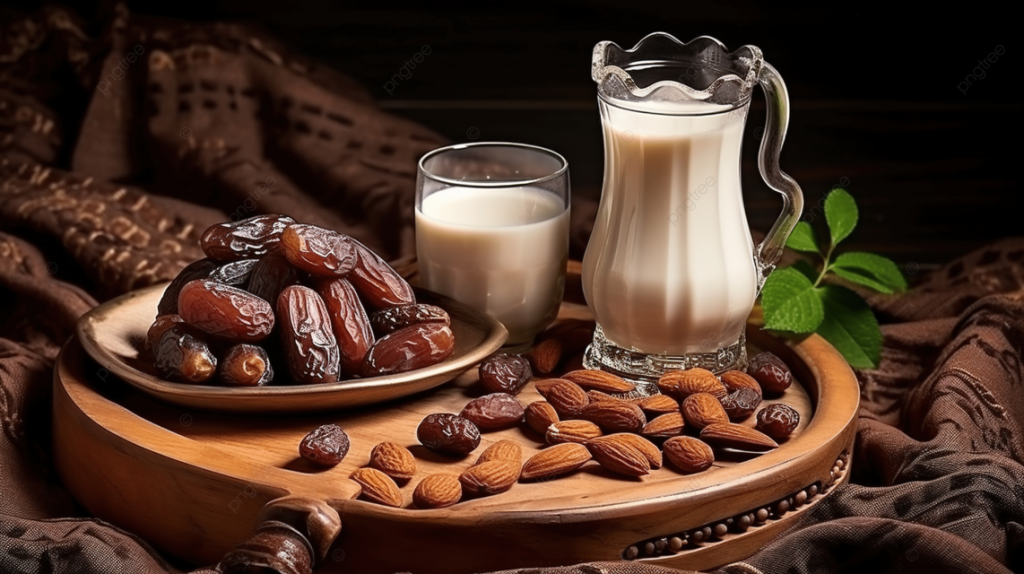
A Month of Spiritual Renewal: Ramadan
Muslims around the world have commenced fasting in fulfillment of a decree of Allah. Fasting in the blessed month of Ramadan, is a time of immense spiritual renewal, self-discipline, and divine closeness. Allah in His infinite mercies bestows enormous gifts unto humankind during this period. Akin to this is a time when the gates of mercy are wide open while “Shaitan” and devils are chained, and every sincere act of worship is rewarded in manifold.
The significance of this holy month is further espoused in the Holy Qur’an in Surah Baqara when Allah says:
“The month of Ramadan [is that] in which was revealed the Qur’an, a guidance for the people and clear proofs of guidance and criterion. So whoever sights [the new moon of] the month, let him fast it…” (Qur’an 2:185)
The above is testament to the fact that, fasting has been ordained in the month of Ramadan in order to guide humankind unto the path of righteousness.
Fasting in the month of Ramadan is one of the five pillars of Islam. It is defined to include a period in which Muslims are required to abstain from eating, drinking or both while eschewing acts deemed forbidden in the religion of Allah—Islam. To this end, fasting in the holy month of Ramadan, goes beyond mere abstinence. Its purpose justifiably is rooted in the attainment of Taqwa (highest level of piety). This rendition is provided for in the Holy book whereas Allah says:
“O you who have believed, fasting has been prescribed upon you as it was prescribed upon those before you, that you may attain taqwa.” (Qur’an 2:183)
Related to this is the pronouncement of our Holy Prophet Muhammad (SAW) describing the act of fasting as a shield:
“Fasting is a shield; so when one of you fasts, let him not speak obscenely or behave foolishly. If someone fights him or insults him, let him say: ‘I am fasting.’” (Bukhari 1894 & Muslim 1151)
It is evidenced in the Hadith that, fasting shields a Moslem from acts that questions his faith with an ultimate purpose of drawing closer to Allah.
Beyond its outward practice, fasting holds profound spiritual significance. The Sufis, in particular, have long regarded the act as a means of subduing the lower self (nafs). Subduing the lower self enables a break away from all forms of worldly desires that will distance an individual from Allah. It is commonplace and a famous saying in the Sufi tradition that “true fasting is not just abstinence from food, but from sins, distractions, and anything that darkens the heart“.
Knowing that the month of Ramadan is “the month of revelation”, it is imperative on us as Muslims to reconnect deeply with the Qur’an as exemplified by the noble Prophet (SAW) and the early generations through sober reflections. While at this, there is a need to constantly engage in dhikr (remembrance of Allah) in furtherance to the spiritual benefits of this sacred month. The importance of dhikr to a Muslim has been highlighted both in the Holy book and Hadith with people highlighting the spiritual benefits it has had in their lives. The Prophet (SAW) is quoted as saying:
“Shall I not inform you of the best of your deeds, the purest in the sight of your Lord, the one that raises your ranks the highest, and is better than spending gold and silver in charity and better than meeting your enemy and striking each other’s necks?” They said: “Yes, O Messenger of Allah.” He said: “It is the remembrance of Allah.” (Tirmidhi 3377)
Again, for those of us who walk the path of Sufism, Ramadan is a time to increase our litanies, seek divine openings, and purify the heart through dhikr. Sheikh Alhaji Ibrahim Niasse (RA) often reminded his disciples that in this month, the spiritual veils are lifted for those who seek Allah with sincerity.
It also behooves on us to remember that, Ramadan is a month of generosity, hence we need to mirror the kindness of the Prophet Muhammad (SAW), who was described as being more generous than the blowing wind during this sacred time. The Qur’an dictates that:
“You will never attain righteousness until you spend in charity from that which you love. And whatever you spend—indeed, Allah is Knowing of it.”(Qur’an 3:92)
The Prophet (SAW) further emphasized:
“Whoever feeds a fasting person will have a reward like his, without detracting from the reward of the fasting person in the slightest.”(Tirmidhi 807)
For many spiritual seekers, feeding the hungry, supporting the less fortunate, and uplifting the community are amongst the most powerful ways to draw nearer to Allah. A famous Sufi saying highlights that:
“If you wish to find God, serve His creation.”
Clearly, service to the creations of Allah in this divine period is a gateway to one’s closeness to Allah.
In conclusion, let us be mindful that, fasting in the month of Ramadan is more than a ritual. Alas, it is a journey of the soul, a purification of the heart, and an opportunity to stand in the light of divine mercy. It is a time when believers move beyond outward worship to inner transformation and from routine prayers to intimate conversations with the Divine.
Let us all embrace this sacred time with sincerity, striving not only to fast with our bodies but also with our hearts. Let us try as much to abstain from sins, distractions, and heedlessness. Let us fill our nights with prayer, our days with dhikr, and our hearts with love —for Allah and His Messenger (SAW) and his creations.
May Allah grant us the ability to experience the full blessings of this month, forgive our sins and those of our forebears, and elevate our ranks among His beloved servants. Ameen.